Top 10 Types of Conference Room Tables for Every Office
A conference room table shapes more than the room’s appearance. It affects how people face one another, share screens, spread out papers, and move through a meeting. The right choice depends on room size, meeting style, accessibility, and technology—not just the finish in a showroom.
Steelcase’s 2016 Global Report surveyed 12,480 workers across 17 countries. It found that 37% were highly engaged and 32% highly satisfied. Those figures do not prove that furniture changes engagement. They do remind us that workplace experience deserves careful attention. A table cannot fix a poor meeting culture. It can, however, make a room easier to use.
Architect Louis Sullivan’s design principle, “form ever follows function,” offers a useful lens for choosing conference room tables. Sullivan was not a table-industry specialist; his principle is relevant because table shape should serve the work. A compact round table may suit quick discussions, while a boat-shaped surface can improve sightlines in a larger room. Small details count: cable access, leg placement, chair clearance, and the distance to a wall-mounted screen. Some choices will still be compromises. A table that works for eight people may feel cramped when ten arrive. This guide compares ten common types, with practical considerations for different offices, room layouts, and meeting needs.
Understanding the Purpose and Core Features of Conference Room Tables
A conference room table shapes how people see, hear, and work with one another. Its purpose goes beyond holding laptops and coffee cups. In a small room, a compact rectangular table can preserve walking space and keep documents within reach. A larger team may need a broad surface for shared plans, but extra width can make conversation feel distant. Fit matters.
Core features should support the room’s actual use. Measure the space, including chair movement and door clearance, before choosing a table. Check whether the surface has enough room for notebooks, screens, and water glasses without crowding. Cable openings can reduce wire clutter, while a durable, easy-to-clean finish handles daily use. The table should feel stable, too. Wobbling legs distract more than people expect.
Shape affects interaction. Round and oval tables can soften visual hierarchy, while rectangular designs often suit presentations and formal agendas. Neither shape guarantees better discussion. I would reconsider any choice based only on appearance; a beautiful table can still block sightlines or leave attendees squeezed against a wall. Test the layout with chairs in place. Then picture a real meeting, with open laptops and someone arriving late.
How Shape, Size, and Layout Influence Meeting Use
A conference table should fit the work people actually do, not just the room’s floor plan.
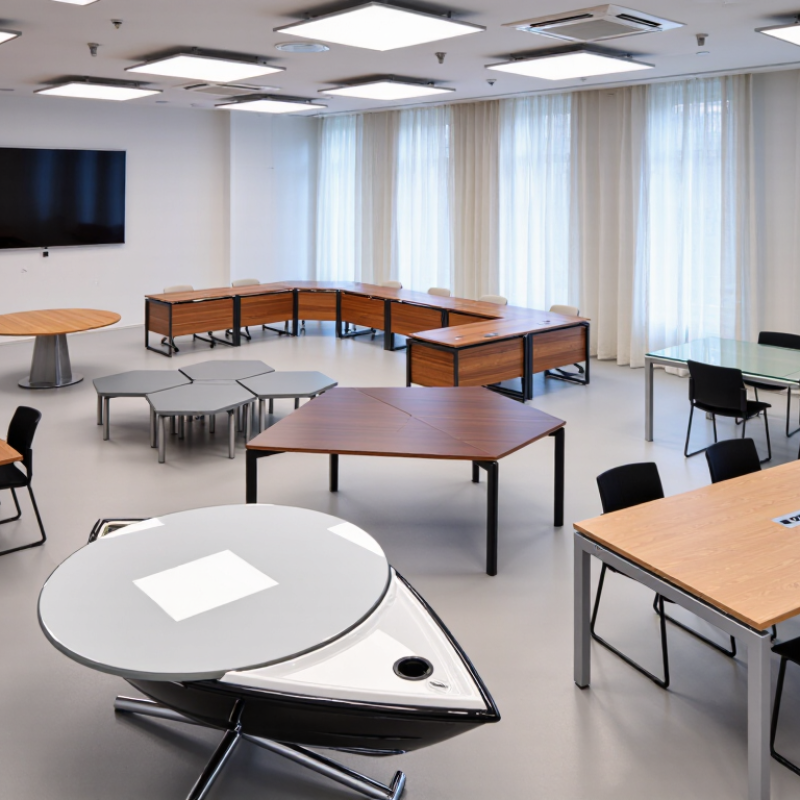
Rectangular tables suit presentations and long sightlines, but can leave people at the ends feeling distant. Boat-shaped tops widen the center, giving screens and papers more space without making every seat equally close. Small rooms differ. A round table encourages face-to-face discussion, though it may waste wall space and limit monitor placement.
Size matters as much as shape. Allow roughly three feet of clearance behind occupied chairs where possible; otherwise, people may struggle to pass during a meeting. Check the table’s depth against laptop use, not just its listed seating capacity. Six seats can look comfortable in a product diagram and feel cramped once notebooks, water glasses, and cables arrive. Measure the room with chairs pulled out.
Layout changes how a table performs. A U-shaped arrangement gives presenters a clear opening and works for training, but uses more floor area than a compact boardroom setup. Modular tables can be rearranged for workshops or smaller groups; still, frequent changes require storage and staff time. One detail is easy to overlook: test sightlines from the least convenient seat. A support column, bright window, or oversized display can make a sensible layout frustrating in practice.
Rectangular, Racetrack, Boat-Shaped, and Oval Conference Tables
Conference room table shape affects more than appearance. It changes sightlines, circulation, and how easily people share documents. Rectangular tables suit long, narrow rooms and larger groups. Their straight edges make seating plans predictable. Yet people at the far ends may feel detached. That matters during quieter discussions.
Racetrack tables soften the corners with rounded ends. They keep a generous central work surface while reducing sharp edges near walkways. Boat-shaped tables widen through the middle and taper toward the ends. This shape can improve sightlines across a wide room. However, the broader center needs space for chairs and cables. Oval tables offer a smooth perimeter and encourage conversation. Their curved edges can waste space along walls. Measure with chairs pulled out, not tucked in.
Tips: Mark the table footprint with tape before choosing a size. Leave about 36 inches of clear passage where possible, and check access to screens, outlets, and doors. Count practical seats, not just listed seats; laptops, notebooks, and water glasses need elbow room. Not always easy to judge. I still tend to underestimate how much space a working meeting needs.
Round, Square, Modular, U-Shaped, V-Shaped, and Standing Tables
Conference table shape affects how people speak, see screens, and share materials. Round tables create easy eye contact and soften formal discussions. They work well for small teams, though a large round surface can leave laptops feeling far apart. Square tables suit compact rooms and quick huddles. Check chair clearance before ordering; tight corners can make entry awkward. Measure twice.
Modular tables let staff join, separate, or angle sections as meeting needs change. This flexibility helps training rooms, but connectors and cable paths need regular attention. U-shaped layouts give presenters a clear focal point and keep faces visible across the room. They need more floor space than many offices expect. V-shaped tables can improve sightlines toward a shared display, yet the angled edges may limit usable tabletop space. Try a floor plan before committing.
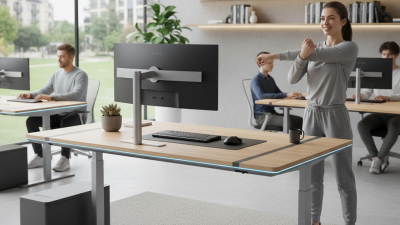
Standing tables support brief check-ins and can make a room feel less formal. They are not comfortable for every person or every meeting, so provide seating nearby. Small details matter: a power outlet near the table edge, a stable base, and enough room to pull back chairs. No shape solves a meeting without a clear purpose. I would still test the layout with actual chairs and equipment; drawings can make a crowded room look deceptively roomy.
Choosing a Conference Table That Fits Your Office
Choosing a conference table starts with the room, not the catalog. Measure the usable floor area, including the space chairs need when people sit down and stand up. A clearance of about 36 inches behind chairs is a useful planning target, though busy walkways may need more. Measure twice. A table that looks compact on a floor plan can feel cramped once laptops, notepads, and coffee cups arrive.
Match the shape to the way people meet. Rectangular and boat-shaped tables suit presentation-focused rooms, while round or oval designs make conversation feel less formal. U-shaped layouts help participants see a presenter, but they use more floor space. Modular tables can be rearranged for workshops; folding models are practical where rooms serve several purposes. There is no universally best option. Even a polished table can be the wrong choice if it blocks a door or leaves remote-meeting equipment awkwardly placed.
Consider capacity, too. Count the usual attendees, then allow room for occasional guests without squeezing chairs together. Check where power outlets sit and whether cables can reach the table safely without crossing walking paths. Finish and material matter in daily use: a surface should handle regular cleaning, and sharp corners may be inconvenient in a narrow room. People notice. Before ordering, mark the proposed tabletop dimensions on the floor with removable tape, then walk around it with chairs pulled out. The test may reveal an inconvenient fit.