
How to Source Eco Series Mugs for Global Buyers in 2026?

Sourcing Eco Series Mugs in 2026 requires more than selecting bamboo fibers, recycled steel, or attractive earth-tone packaging. Global buyers now examine material evidence, factory controls, durability, and end-of-life options. The OECD’s Global Plastics Outlook (2022) reports that only 9% of plastic waste was recycled globally between 2019 and 2021. That statistic makes vague “green” claims difficult to defend.

Consumer expectations are also changing. The IBM Institute for Business Value and the National Retail Federation reported that 57% of surveyed consumers were willing to change purchasing habits to reduce environmental impact. However, reusable drinkware reports often combine bottles, tumblers, and mugs. The category is not perfectly defined. That uncertainty matters. Buyers should request item-level data, including recycled content percentages, food-contact testing, thermal performance, leak resistance, and packaging composition.

Circular-economy pioneer Ellen MacArthur states, “A circular economy is based on the principles of designing out waste and pollution, keeping products and materials in use, and regenerating natural systems.” This principle should guide every Eco Series Mugs sourcing decision. A durable stainless-steel mug may outperform a fragile plant-fiber model after repeated washing. A recycled material claim means little without supplier certificates and traceable production records. Factory experience matters too. Auditors should inspect worker safety, wastewater handling, quality controls, and corrective actions.

Real sourcing is rarely perfect. Suppliers may provide incomplete lifecycle information. Transport emissions can also undermine impressive material claims. Responsible buyers should compare alternatives, document assumptions, and improve specifications over time. In 2026, the strongest Eco Series Mugs programs will combine verified materials, practical performance, transparent suppliers, and honest environmental communication.
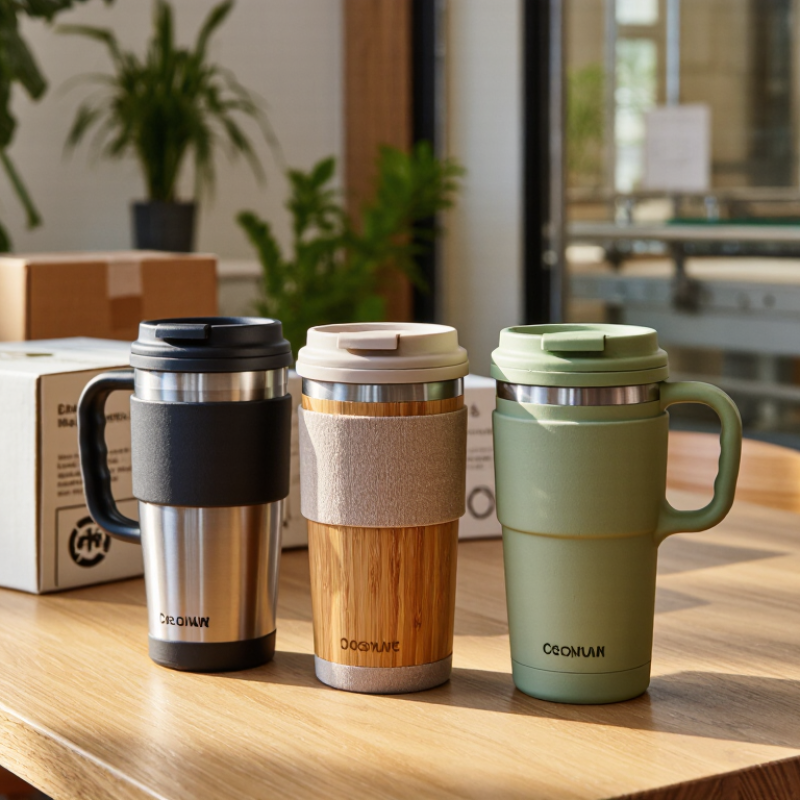
How to Source Eco Series Mugs for Global Buyers in 2026?

Eco Mug Materials and Sustainability Standards for Global Sourcing

How to Source Eco Series Mugs for Global Buyers in 2026?

Eco mug sourcing starts with material evidence, not green-colored packaging. Recycled stainless steel offers durability and strong recovery potential. Ceramic can perform well, but kiln energy and transport weight matter. Bamboo-fiber composites need careful review because some include plastic resins. “Natural” does not always mean compostable.

The Circularity Gap Report 2024 estimates that only 7.2% of the global economy is circular. This figure shows why recycled content claims need verification. Ask suppliers for recycled-content records, batch traceability, and third-party test reports. ISO 14021 supports self-declared environmental claims, while ISO 14024 covers third-party environmental labeling. ISO 14025 can support environmental product declarations. These standards improve trust, but they do not replace factory audits. I have seen attractive certificates with unclear scope. That is a warning.

Tips: Compare the mug’s full life cycle. Check raw materials, production energy, packaging, shipping weight, expected lifespan, and end-of-life routes. Request food-contact safety documentation for each market. Confirm whether lids, coatings, handles, and silicone parts follow the same claim. The UNEP Global Resources Outlook 2024 warns that global material extraction may rise sharply by 2060 without stronger resource efficiency. Therefore, select durable designs with replaceable or recyclable components. Keep claims specific. “Contains 40% recycled steel” is stronger than “planet-friendly.” Recheck supplier data annually. Supplier conditions can change.

Global Market Requirements for Eco Series Mugs in 2026

Global Market Requirements for Eco Series Mugs in 2026

Global buyers now expect eco series mugs to satisfy both sustainability goals and food-contact requirements. A natural-looking finish is not enough. Suppliers should provide material specifications, migration test reports, factory quality records, and clear production traceability. Requirements may differ between the European Union, North America, and Asian markets, so each shipment needs destination-specific verification.

Material choices require careful evidence. Recycled stainless steel, bamboo fiber, ceramic, and certified plastics can support an environmental claim, but only when their percentages are documented. Packaging should reduce unnecessary layers and use recyclable materials where local systems can process them. Buyers should also check lids, seals, coatings, inks, and adhesives. Small components can affect safety and recyclability.

Details matter here.

In practical sourcing, request a pre-production sample, then test heat retention, leakage, odor, staining, and repeated washing. A mug that looks excellent after one use may fail after thirty dishwasher cycles. Suppliers should disclose production capacity, defect controls, and corrective-action procedures. Digital records can improve traceability, although smaller factories may still rely on incomplete paperwork. That weakness deserves attention, not polite assumptions. Environmental claims should remain measurable, modest, and supported by current documents. Audits, laboratory testing, and updated market reviews help buyers make more reliable decisions in 2026.

How to Identify and Evaluate Reliable Mug Suppliers

How to Source Eco Series Mugs for Global Buyers in 2026?

Reliable mug sourcing begins with evidence, not attractive sustainability claims. Ask suppliers for factory addresses, production photos, material specifications, and recent third-party test reports. For ceramic mugs, verify lead and cadmium migration results, glaze durability, thermal-shock performance, and food-contact compliance for each target market. A certificate without a matching factory or product code is a warning sign. Request a pre-production sample, then compare its weight, handle strength, surface finish, and packaging with the approved specification.

Environmental data should also be measurable. The United Nations Environment Programme reported in Turning off the Tap (2023) that global plastic pollution could be reduced by 80% by 2040 through reuse, recycling, and better product design. This supports asking suppliers about recycled packaging, carton efficiency, kiln energy, wastewater controls, and production scrap. However, “eco” is often too vague. Require percentages, calculation methods, and supporting records. I would also request monthly capacity, defect rates, replacement policies, and shipping history. A low price can hide unstable quality.

Visit the facility when possible. Watch how workers inspect rims and pack handles. Speak with quality managers, not only sales staff. Check whether the supplier can repeat the same glaze color across batches. Small color differences matter in retail displays. Use a scorecard covering compliance, quality, traceability, delivery, and environmental performance. My own weakness is trusting polished samples too quickly. One successful sample proves very little. A controlled pilot order reveals more. According to the World Bank’s What a Waste 2.0 report, global municipal waste may reach 3.40 billion tonnes annually by 2050, making packaging reduction a practical sourcing question, not decoration.

Product Customization, Testing, and Certification Procedures

How to Source Eco Series Mugs for Global Buyers in 2026?

Customization should begin with the user’s real application, not only visual appeal. Choose recycled stainless steel, certified ceramic, or bio-based materials with traceable inputs. Recycled content does not automatically mean food-contact safety. McKinsey’s 2023 global packaging research found that 60–70% of consumers would pay more for sustainable packaging. That preference still depends on durability and credible evidence. Small details matter. Specify glaze color, logo position, wall thickness, handle strength, carton size, and minimum order quantity in one approved drawing. Test the decoration too.

A practical testing plan should cover overall migration, specific migration, heavy metals, odor, leakage, thermal shock, and dishwasher resistance. For insulated mugs, check temperature retention after repeated opening cycles. For ceramic mugs, inspect crazing under magnification. Use laboratories operating under ISO/IEC 17025. Request raw test reports, sample photographs, and batch numbers. European buyers should review Regulation (EC) No. 1935/2004 requirements, while United States shipments may require applicable 21 CFR food-contact compliance. Requirements vary by destination.

Not always.

Certification claims need careful wording. Verify recycled-content documentation through an independent chain-of-custody system, rather than trusting a supplier’s brochure. The OECD reported that global plastic waste doubled from 2000 to 2019, while only 9% was recycled. This supports stronger material traceability, but it does not prove a mug is sustainable. One weakness in my own sourcing checklist is overlooking replacement parts, especially silicone seals and lids. Buyers should request spare-part availability, cleaning instructions, and a corrective-action process when testing fails. A cheaper sample can become expensive after customs delays, failed inspections, or customer complaints.

Pricing, Logistics, and Risk Control for International Orders

How to Source Eco Series Mugs for Global Buyers in 2026?

Pricing depends on more than the mug’s unit cost. Ask suppliers to separate material, printing, packaging, tooling, and inspection fees. Recycled ceramic or plant-based materials may raise prices by 8% to 20%. Confirm the percentage with current test documents. Compare FOB pricing with landed cost, including freight, duties, insurance, and warehouse handling. A low quotation can become expensive after delivery.

Logistics planning should begin before production. Request carton dimensions, gross weight, pallet limits, and estimated production time. These details affect container space and shipping rates. Choose packaging with molded protection and moisture barriers for long routes. Confirm food-contact testing and destination-market documentation before payment. For risk control, approve a sealed pre-production sample. Use staged payments linked to inspection results. An independent check should verify color, dimensions, glaze defects, and carton strength. I would not rely on photographs alone. That mistake still happens.

Tips: Keep two qualified suppliers for important orders. Record agreed tolerances in the purchase contract. Buy cargo insurance for high-value shipments. Add a small time buffer around major holidays and port congestion. Review currency changes before confirming prices. Test a smaller shipment first. It may feel slower, but it exposes weak packaging and unclear documents before a large order. Pricing forecasts are never perfect, so leave room for revision.

Article Source: