Why Choose a Charcuterie Board Set for Your Business
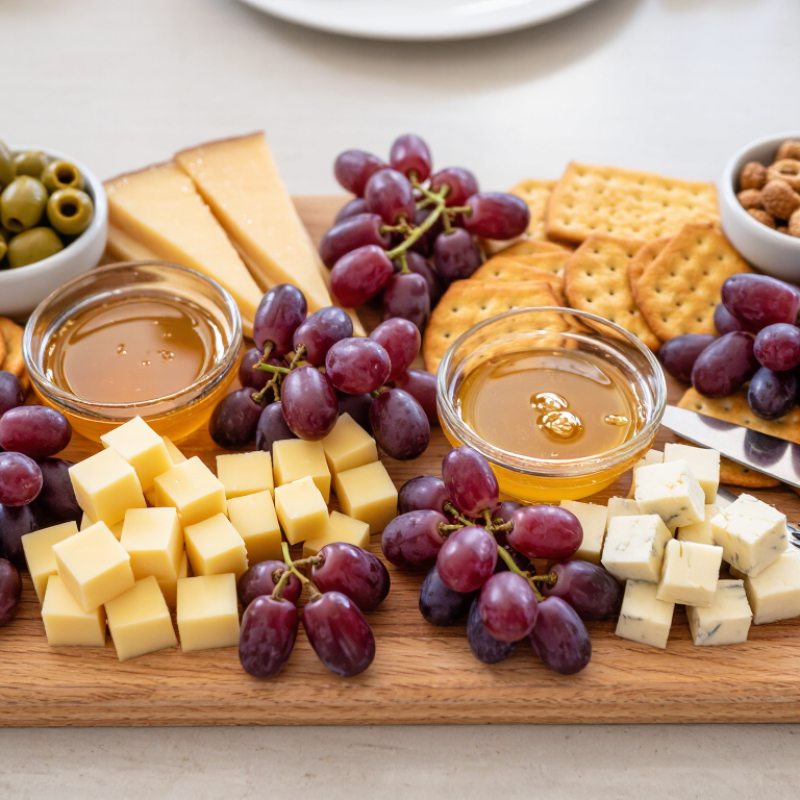
For a café, hotel, caterer, or specialty shop, presentation can shape a guest’s first impression before the first bite. A Charcuterie Board Set provides a coordinated surface and, depending on its design, serving pieces for cheeses, fruit, crackers, and accompaniments. Pale cheese, dark grapes, and a small bowl of honey can make a display feel considered without elaborate decoration. A consistent style may also help a business create a recognizable look across brunch service, tasting events, and catered tables. Small details matter. Board dimensions affect how easily displays fit on tables, while handles and separate bowls can make setup less awkward during busy service. Still, appearance is only part of the decision. A board should suit the menu, available storage, cleaning routine, and pace of service.
A practical evaluation considers materials, construction, included accessories, and care instructions. Staff may need to carry boards between a kitchen and dining area, so weight and grip deserve attention. The surface should offer enough room for a realistic serving, not just a product photograph. Check whether the set’s bowls and utensils match the foods you plan to serve; extra pieces are not automatically useful. Compare the purchase price with expected frequency of use and replacement needs. A more attractive option may not be the most workable one. No single set fits every business, and even a well-chosen board can become inconvenient if it is difficult to store or clean. By weighing presentation against daily handling, businesses can select a set that supports both the guest experience and the work behind it.
Charcuterie Boards in the National Restaurant Association’s $1.5 Trillion U.S. Market
Why Choose a Charcuterie Board Set for Your Business
The National Restaurant Association’s 2025 State of the Restaurant Industry report projected U.S. restaurant and foodservice sales of $1.5 trillion. That scale signals opportunity, but competition for diners’ spending remains intense. A well-planned charcuterie board can give guests a shareable option that feels special without requiring a complicated kitchen setup. Picture sliced pears, measured portions of cheese, crisp crackers, and cured meats arranged on a sturdy board. The presentation can encourage group ordering and add visual appeal to a menu. Still, attractive food does not guarantee profit. Ingredient costs, prep time, and waste need attention.
A dedicated board set can support consistent portions and quicker service, especially when staff prepare several boards during a busy shift. Choose surfaces that are durable, easy to clean, and suited to your serving size. Keep a simple build sheet with ingredient weights and substitutions. This makes costs easier to review and helps different staff members assemble the same dish. A small detail matters.
Tips: Track sales and leftover ingredients for several weeks. Test one board size before expanding the menu. Use seasonal fruit to add color, but avoid buying more than your kitchen can use. A board that looks generous but strains food costs needs reworking.
Why Choose a Charcuterie Board Set for Your Business?
U.S. Restaurant Industry Sales: 2019–2025
The restaurant market’s scale highlights the opportunity to create memorable serving experiences. Charcuterie boards can support attractive shareable presentations; this chart shows industry sales, not sales of charcuterie boards. Figures are in billions of U.S. dollars; 2025 is a National Restaurant Association forecast.
Source: National Restaurant Association industry sales estimates and 2025 forecast.
Commercial Board Sets: Materials, Components, and Service Capacity
Why Choose a Charcuterie Board Set for Your Business
A commercial board set should match both your menu and your cleaning routine. Choose food-contact surfaces that are durable, smooth, and easy to clean. The FDA Food Code 2022 identifies these as key qualities for food-contact materials. Hardwood offers a warm presentation, but it needs careful care. Nonporous materials can simplify wipe-downs, though they may feel less inviting. There is no perfect choice.
Components matter as much as the board. A set with separate bowls, spreaders, and removable inserts helps keep olives, dips, and crackers distinct during service. Check that pieces fit standard storage shelves and can be replaced individually. Size capacity for real orders: a compact board may serve two guests, while larger formats suit shared tables. The National Restaurant Association’s 2024 State of the Restaurant Industry projected U.S. restaurant sales at $1.1 trillion, underscoring the scale of service needs—not a guarantee that every venue needs more boards. Test one set during a busy shift before buying in quantity.
Tips: Ask staff to load, carry, and clean a sample set. Count how many portions it holds without crowding. Leave room for improvement; our first capacity estimate can be wrong.
Why Choose a Charcuterie Board Set for Your Business - Commercial Board Sets: Materials, Components, and Service Capacity
| Board material | Typical commercial set components | Practical strengths | Care and service notes | Approximate serving capacity |
| Hard maple | Board, small condiment bowls, cheese knives, serving tongs | Dense hardwood with a fine grain; suitable for repeated food-service use when properly maintained. | Hand-wash and dry promptly. Periodic food-grade mineral oil helps maintain the wood; avoid soaking and dishwashers. | About 6–10 guests on a 12 × 8 in board; 10–16 on a 16 × 10 in board. |
| Walnut | Board, ramekins, cheese knives, optional slate or paper labels | Dark color gives a strong visual contrast for cheeses, fruit, and cured meats; works well for presentation-led service. | Hand-wash and dry immediately. Use a food-safe finish and check regularly for deep cuts or surface damage. | About 6–10 guests on a 12 × 8 in board; 10–16 on a 16 × 10 in board. |
| Bamboo | Board, removable serving bowls, basic cheese knives | Lightweight and widely available in multiple sizes; a practical option for portable or high-turnover service. | Hand-wash and dry thoroughly. Avoid long soaking and high heat, which can damage laminated construction. | About 4–8 guests on a 10 × 7 in board; 8–14 on a 14 × 10 in board. |
| Acacia | Board, condiment cups, cheese knives, optional carrying handles | Distinctive natural grain and commonly available serving-board sizes make it suitable for casual dining and catered events. | Hand-wash only and dry promptly. Recondition with food-safe oil as needed; do not leave standing water on the surface. | About 6–10 guests on a 12 × 8 in board; 10–16 on a 16 × 10 in board. |
| Slate serving board | Slate board, chalk marker or food-safe labels, optional wooden base | Non-porous surface is useful for labeling cheese varieties and creating a clear, organized display. | Wash gently and dry fully. Slate can chip if dropped; use a stable, padded storage area and avoid abrasive cleaning tools. | About 4–8 guests on a 12 × 8 in board; 8–12 on a 16 × 10 in board. |
| Capacity guide: Serving estimates are planning ranges, not fixed limits. They assume the board is one part of a shared spread, with roughly 2–3 oz (57–85 g) of cheese and meat per guest, plus accompaniments. Increase quantities when the board is the main food offering; follow local food-safety procedures for temperature control, cleaning, and allergen communication. |
Menu Economics: Using Board Portions to Manage Food Costs and Waste
Why Choose a Charcuterie Board Set for Your Business
A well-planned board can make food costs easier to see and control. Set a portion guide for each ingredient, then weigh a sample during prep. For example, you might portion two slices of cured meat, a small wedge of cheese, and six crackers per serving. The exact mix depends on your menu and customers. Keep it measurable. A consistent layout also helps staff assemble boards quickly and notice when portions start growing.
Track ingredient use alongside sales for a few weeks. If a cheese consistently remains on returned boards, reduce its portion or offer it as an optional add-on. Store delicate items in small batches, and refill only when needed. This can limit spoilage, especially during slower shifts. But neat portion charts are not magic. Diners may share boards, and appetite varies; rigid portions can feel stingy. Review plate returns and staff notes, then adjust thoughtfully. A simple prep sheet with portion weights, restock times, and daily waste gives managers useful evidence for changing the menu without guessing.
Food Safety: The FDA Food Code’s 41°F Cold-Holding Standard
A charcuterie board set can make service look polished, but presentation should never outrank temperature control. Sliced meats and many soft cheeses need careful cold holding. The FDA Food Code sets 41°F (5°C) or below for cold holding time/temperature control for safety foods.
That number matters. The Food Code is a model standard, and local requirements may differ. Use a calibrated probe thermometer to check food itself, not just the refrigerator display. Record readings during service, especially when boards sit out for repeated guest visits. A quick touch cannot confirm safe temperature.
For busy events, keep backup portions refrigerated and replenish boards in small batches. Set serving platters over ice or use chilled equipment designed for food service, while keeping meltwater away from the food. Clean utensils and separate handling tools help reduce cross-contamination. In practice, the hardest part may be remembering to recheck a beautiful board once conversation and service get busy. A written schedule helps, though staff may need to adjust it for room conditions and local rules.
Service Turnover: USDA’s Two-Hour Limit for Perishable Foods
A charcuterie board set can make service turnover more controlled, not just more attractive. Use smaller boards and replenish them from refrigerated backup portions. USDA guidance says perishable food should not remain at room temperature for more than two hours, or one hour when temperatures exceed 90°F. That window is short. A busy dining room can lose track of it unless staff mark the time each board leaves refrigeration.
The CDC estimates that 48 million people in the United States get sick from foodborne illness each year. This broad estimate covers many foods and settings, but it shows why careful handling matters. Keep meats and cheeses at 40°F or below until service, and avoid topping up a warm, partly used board with fresh food. Swap it out instead. Small batches help.
A set of interchangeable boards gives staff a practical rotation: one on display, another being cleaned and sanitized, and a third ready for chilled ingredients. Follow your local food-safety requirements, and record discard times during service. USDA’s two-hour limit is a useful ceiling, not a target to aim for. I’ve seen attractive displays encourage generous portions; that can also mean more food sitting out than expected. Review serving sizes and turnover after busy shifts, then adjust the batch size.