


China Best Wall Cladding Manufacturers and Suppliers?
Choosing among China’s best Wall Cladding manufacturers and suppliers requires more than comparing catalog prices. The right partner must understand climate, building movement, fire performance, moisture control, and installation conditions. A coastal project needs different protection from a dry inland warehouse. Material samples should be checked for color consistency, coating quality, dimensions, and edge finishing. Small defects often become visible across a large façade.
Dr. Joseph Lstiburek, a respected building scientist, has stated, “The perfect wall is not a product. It is a concept.” This principle matters when evaluating Wall Cladding systems from China. A reliable supplier should explain the complete wall assembly, including insulation, membranes, fasteners, joints, drainage paths, and maintenance access. Certifications are useful, but they should be verified against the project’s location and applicable building requirements. A certificate alone does not guarantee good installation.
Factory experience also deserves close attention. Ask for production records, quality-control procedures, test reports, and completed project references. Confirm whether the supplier can provide drawings, color samples, packaging details, and technical support after delivery. Communication matters. So does accountability.
A polished website proves little. That assumption can fail.
The strongest manufacturers usually combine consistent production with practical engineering advice. Yet no supplier is perfect. Lead times can change, finishes may vary slightly, and drawings may require revision. Careful buyers allow room for these realities. This guide examines China’s leading Wall Cladding manufacturers and suppliers through product quality, technical capability, customization, compliance, service, and long-term value.
What Is Wall Cladding and Why Source It from China?
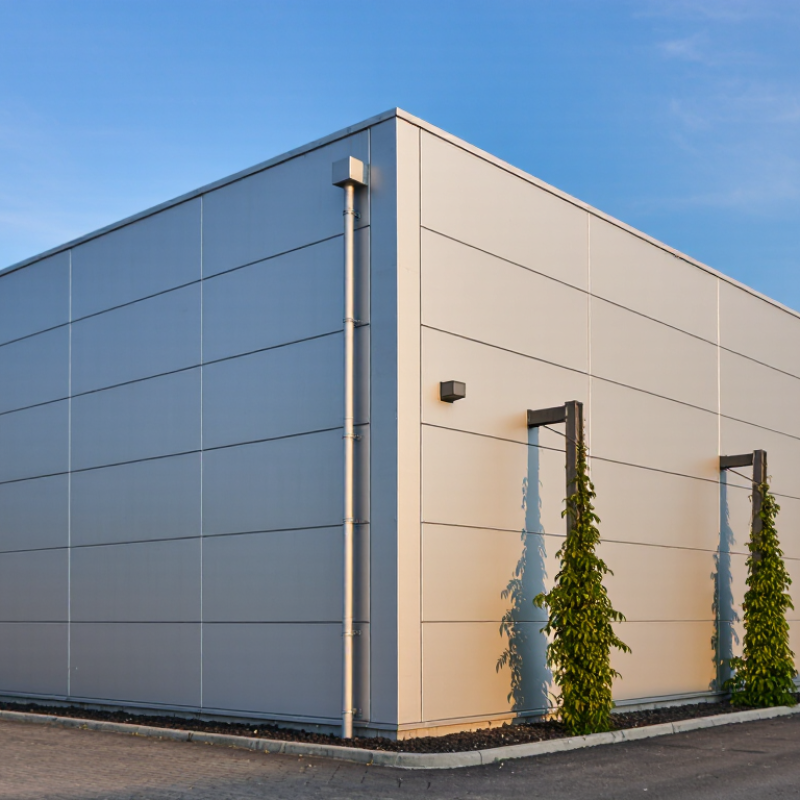
Wall cladding is a protective and decorative layer installed over a building’s exterior or interior walls. It may use fiber cement, aluminum, stone, ceramic panels, wood, or engineered composites. The system can improve weather resistance, insulation support, and visual consistency. It is not the same as structural walls.
China is a practical sourcing market because it offers broad material capacity, mature fabrication equipment, and flexible production volumes. Buyers can often compare finishes, profiles, thicknesses, and mounting systems within one supply region. A hotel project may require fire-rated panels, while a residential renovation may prioritize lightweight boards and simple installation. Clear technical drawings matter.
Good sourcing requires more than a low quotation. Request material certificates, coating specifications, test reports, installation details, and recent production photos. Confirm dimensions with a physical sample. Check color variation under daylight, not only under showroom lighting. A sample can look excellent and still hide production weaknesses.
Ask how the supplier controls cutting accuracy, moisture protection, packaging, and batch consistency. Independent inspection before shipment can reveal chipped edges, uneven coating, or missing accessories. Lead times also need written confirmation. Delays happen. That risk deserves honest planning. Buyers should compare total landed cost, including tooling, freight, duties, wastage, and replacement panels. A reliable supplier communicates limitations instead of promising everything. Supplier verification remains essential, because polished documents do not always prove stable factory performance.
China Best Wall Cladding Manufacturers and Suppliers? - What Is Wall Cladding and Why Source It from China?
| Wall Cladding Type | Basic Composition | Typical Thickness | Typical Weight | Key Performance Characteristics | Common Applications | Important Sourcing Checks |
|---|---|---|---|---|---|---|
| Aluminum Composite Panel | Two aluminum skins bonded to a mineral-filled or polymer-based core. | 3–6 mm | Approximately 5–8 kg/m² | Lightweight, flat, easy to fabricate, and suitable for folded or routed panels. | Commercial façades, entrance features, canopies, signage backgrounds, and interior walls. | Confirm core type, aluminum skin thickness, coating system, peel strength, flatness, and fire-test documentation. |
| Solid Aluminum Panels | Single formed or fabricated aluminum sheet, usually with a protective coating. | 2–5 mm | Approximately 5.5–14 kg/m² | Good corrosion resistance, low maintenance, and strong design flexibility. | Building façades, soffits, column covers, parapets, and architectural feature walls. | Check alloy designation, temper, sheet thickness, coating specification, color tolerance, and installation details. |
| Fiber Cement Board | Cement, cellulose fibers, mineral fillers, and water, manufactured as a rigid sheet. | 6–12 mm | Approximately 10–18 kg/m² | Non-combustible mineral content, dimensional stability, and resistance to moisture and rot. | Ventilated façades, residential exteriors, rainscreen systems, and soffits. | Verify density, water absorption, freeze-thaw performance, bending strength, edge quality, and applicable fire classification. |
| High-Pressure Laminate Panel | Decorative resin-impregnated papers compressed over a kraft-paper core. | 6–13 mm | Approximately 8–14 kg/m² | Wide color and texture selection, impact resistance, and relatively simple panel replacement. | Ventilated façades, balconies, educational buildings, retail exteriors, and interior feature walls. | Check UV resistance, water resistance, panel density, formaldehyde classification, fire performance, and fastener compatibility. |
| Terracotta Cladding | Fired natural clay formed into panels, baguettes, or rainscreen units. | 15–30 mm | Approximately 30–55 kg/m² | Color stability, mineral durability, non-combustibility, and a natural architectural appearance. | Prestige façades, cultural buildings, offices, public facilities, and ventilated curtain-wall systems. | Review water absorption, dimensional tolerances, frost resistance, glaze consistency, breakage rate, and subframe engineering. |
| Natural Stone Panels | Cut slabs or tiles made from granite, marble, limestone, slate, or other natural stone. | 20–40 mm | Approximately 50–110 kg/m² | High visual value, long service potential, and strong resistance to weathering when correctly selected. | Luxury façades, hotels, civic buildings, entrances, plinths, and feature walls. | Check stone type, quarry consistency, flexural strength, water absorption, veining, slab thickness, anchoring, and packing protection. |
| Wood-Plastic Composite Cladding | Wood fibers or flour combined with thermoplastic polymers and additives. | 12–25 mm | Approximately 12–25 kg/m² | Wood-like appearance, low routine maintenance, and resistance to insects and decay. | Residential façades, balconies, garden structures, hospitality projects, and decorative wall zones. | Confirm polymer content, UV stabilizers, water absorption, slip or surface texture, thermal expansion, and fire rating. |
| Zinc Cladding | Rolled zinc sheet or zinc alloy panels installed as standing-seam or cassette systems. | 0.7–1.2 mm | Approximately 5–9 kg/m² | Low maintenance, recyclable material, and a protective patina that develops over time. | Roof-to-wall transitions, façades, dormers, parapets, and contemporary architectural envelopes. | Verify alloy composition, sheet thickness, patina or finish, substrate compatibility, ventilation, drainage, and movement allowance. |
Note: Thickness, weight, durability, and fire performance vary by product construction, finish, installation method, and local regulations. Request current technical datasheets, test reports, samples, and project-specific compliance documents before purchase.

